Healthcare coding can feel routine until a claim gets denied, delayed, or audited. Then it becomes very clear that small coding choices carry real weight. For providers, billers, and practice managers, understanding the difference between CPT codes and ICD codes is still one of the most important parts of the revenue cycle in 2026.
These two code sets work together, but they do very different jobs. One explains what you did. The other explains why you did it. If those pieces do not match, the claim may not hold up with payers.
This guide breaks down the difference in simple terms. We will look at what CPT and ICD codes mean, how they are used together, where practices often make mistakes, and what healthcare providers should pay close attention to in 2026.
Why CPT and ICD Codes Still Matter So Much in 2026
Coding has never been just an administrative task. It affects:
- Claim approval and reimbursement
- Medical necessity review
- Compliance and audit risk
- Quality reporting
- Patient billing accuracy
- Overall revenue cycle performance
In 2026, payers continue to tighten edits, review documentation more closely, and rely on automated systems to flag mismatches. That means clean coding is not optional. It is part of good clinical and business practice.
The better your team understands how coding systems connect, the easier it becomes to:
- Reduce denials
- Avoid undercoding or overcoding
- Support documentation properly
- Improve payment timelines
- Lower rework for front-office and billing teams
For medical practices, outpatient groups, and specialty providers, this is one of those areas where clarity saves both time and money.
What Are CPT Codes?
CPT stands for Current Procedural Terminology. These codes are used to describe the services and procedures a provider performs.
In simple terms, CPT codes answer this question:
What was done for the patient?
Examples may include:
- Office visits
- Minor procedures
- Diagnostic testing
- Surgical services
- Preventive care
- Telehealth services
CPT codes are essential for billing because they tell the payer what service the provider wants to be reimbursed for.
Common Categories of CPT Codes
CPT codes are generally grouped into a few main categories.
Category I Codes
These are the most commonly used CPT codes. They cover standard medical services and procedures across many specialties.
Examples include:
- Evaluation and management visits
- Radiology
- Laboratory testing
- Surgery
- Anesthesia
Category II Codes
These are tracking codes used for performance measurement. They are optional in many cases and often support quality reporting rather than direct payment.
Category III Codes
These are temporary codes for emerging technologies, services, and procedures.
If your practice performs newer or evolving services, these codes may appear more often.
For official code set background, providers can review general coding resources from the Centers for Medicare & Medicaid Services (CMS)
What Are ICD Codes?
ICD stands for International Classification of Diseases. In the U.S., providers use ICD-10-CM diagnosis codes to describe the patient’s condition, illness, injury, symptom, or reason for the visit.
ICD codes answer this question:
Why was the patient seen or treated?
Examples include diagnoses such as:
- Type 2 diabetes
- Hypertension
- Low back pain
- Acute sinusitis
- Asthma
- Chest pain
While CPT codes describe the service, ICD codes explain the medical reason behind it.
Why Diagnosis Coding Is So Important
Diagnosis codes do more than support payment. They also affect:
- Medical necessity
- Risk adjustment
- Public health data
- Clinical reporting
- Population health analysis
That is why ICD coding needs to be specific and supported by the medical record. A vague diagnosis can lead to delays, denials, or questions from payers.
For diagnosis coding updates and classification guidance, the CDC’s ICD resources are useful
CPT vs ICD Codes: The Core Difference
This is the simplest way to remember it:
- CPT = what the provider did
- ICD = why the provider did it
They are not interchangeable. They serve different roles on the claim, but they must work together.
A Simple Example
Let’s say a patient comes in with ongoing knee pain.
- The ICD code reflects the diagnosis or symptom, such as knee pain or osteoarthritis.
- The CPT code reflects the service performed, such as an office visit, X-ray, or injection.
If the documentation supports the diagnosis and the procedure makes clinical sense for that diagnosis, the claim is more likely to move through cleanly.
If not, the payer may reject or deny it.
Think of It This Way
A useful way to explain the difference is:
- ICD tells the story
- CPT shows the action
You need both for a complete billing picture.
How CPT and ICD Codes Work Together on a Claim
A claim is strongest when the diagnosis supports the service billed. This is where many preventable issues show up.
For example:
- A high-level office visit must be supported by proper documentation
- A diagnostic test must connect to a diagnosis that justifies it
- A procedure must align with the patient’s condition and payer rules
This link between procedure and diagnosis is often reviewed through medical necessity edits.
When the Link Is Weak
Problems happen when:
- The diagnosis is too broad
- The wrong diagnosis is attached to the service line
- Documentation does not support the level of service
- A screening service is billed with a problem-based diagnosis, or the reverse
- Laterality, acuity, or encounter details are missing when required
In 2026, more payer systems are catching these issues automatically. Even small mismatches can trigger denials before a human reviewer ever sees the claim.
Common Mistakes Providers Make With CPT and ICD Coding
Even experienced teams can run into coding trouble. Most problems are not caused by a lack of effort. They usually come from rushed workflows, incomplete documentation, or code updates that were missed.
Here are some of the most common issues.
1. Confusing Diagnosis Codes With Procedure Codes
This sounds basic, but it still happens in busy offices. Staff may know both code sets exist but not fully understand their separate roles.
That can lead to:
- Incorrect claim entry
- Improper charge capture
- Poor communication between clinical and billing teams
2. Using Nonspecific ICD Codes When Specificity Is Available
Payers increasingly expect detail when the record supports it.
Missing details may include:
- Right vs left side
- Acute vs chronic
- Initial vs subsequent encounter
- Associated complications
- Exact anatomical location
The more precise the diagnosis, the easier it is to support medical necessity and reduce questions later.
3. Choosing a CPT Code Based on Habit
Some practices rely too heavily on old coding habits. That is risky, especially with services that have updated guidance or documentation requirements.
This can result in:
- Undercoding, which reduces revenue
- Overcoding, which raises compliance risk
- Billing codes that no longer match current payer rules
4. Failing to Match Documentation to the Code
Documentation must support both the diagnosis and the service billed. If the note is thin, copied forward, or unclear, the code may not stand up in an audit.
5. Missing Annual Updates
Both CPT and ICD coding systems are updated regularly. A code that worked last year may be revised, deleted, or replaced.
That is one reason ongoing training matters so much.
What Healthcare Providers Should Watch Closely in 2026
Coding in 2026 is not just about learning code definitions. It is about staying current with how payers interpret them, how documentation is reviewed, and how technology affects claim processing.
Greater Emphasis on Specificity
Payers are asking for more precision, not less. That applies to both diagnosis coding and procedure selection.
Providers should pay closer attention to:
- Detailed assessment notes
- Clear treatment rationale
- Procedure indications
- Comorbidities that affect care
- Accurate follow-up status
Stronger Scrutiny on Medical Necessity
A technically correct CPT code can still be denied if the ICD code does not justify it. This is especially true for:
- Imaging
- Diagnostic testing
- Repetitive therapies
- Certain outpatient procedures
- Higher-cost services
Medical necessity reviews continue to shape payment outcomes.
More Automated Edits and Prepayment Review
Many denials now happen before claims reach manual review. Automated systems compare:
- Code combinations
- Frequency limits
- Place of service
- Modifier use
- Diagnosis-to-procedure logic
That means coding errors are being caught faster and at scale.
Ongoing Documentation Pressure
Documentation remains the foundation of compliant coding. In 2026, providers should expect continued attention to:
- Notes that clearly support visit level
- Diagnosis specificity
- Procedure details
- Time and medical decision-making where relevant
- Avoiding cloned or overly generic language
For broader compliance and documentation guidance, the Office of Inspector General (OIG) remains a helpful public resource:
https://oig.hhs.gov/compliance/
Best Practices to Improve Coding Accuracy
Healthcare providers do not need perfect coding on day one. But they do need reliable systems that help staff catch errors early.
Here are practical ways to improve.
Train Clinical and Billing Teams Together
Coding works better when providers, coders, and billers understand each other’s roles.
Joint training can help teams align on:
- Documentation needs
- Common denial trends
- New code changes
- Specialty-specific coding issues
Audit Regularly
Internal audits can reveal patterns before payers do.
Look for:
- Repeated diagnosis mismatches
- Overuse of unspecified codes
- Incorrect modifiers
- Visit levels that do not match notes
- Frequent denials by code type
Use Current Coding Resources
Do not rely on outdated cheat sheets or memory alone. Annual updates matter, and so do payer policy changes.
Improve Charge Capture Workflows
A claim is only as good as the data that enters the system. Review how services and diagnoses move from the exam room to the billing platform.
Focus on Documentation Habits
Good coding starts with good charting.
Encourage providers to document:
- Why the patient was seen
- What was evaluated
- What was done
- Why the service was medically necessary
- What follow-up or plan was discussed
Why This Matters for Revenue Cycle Health
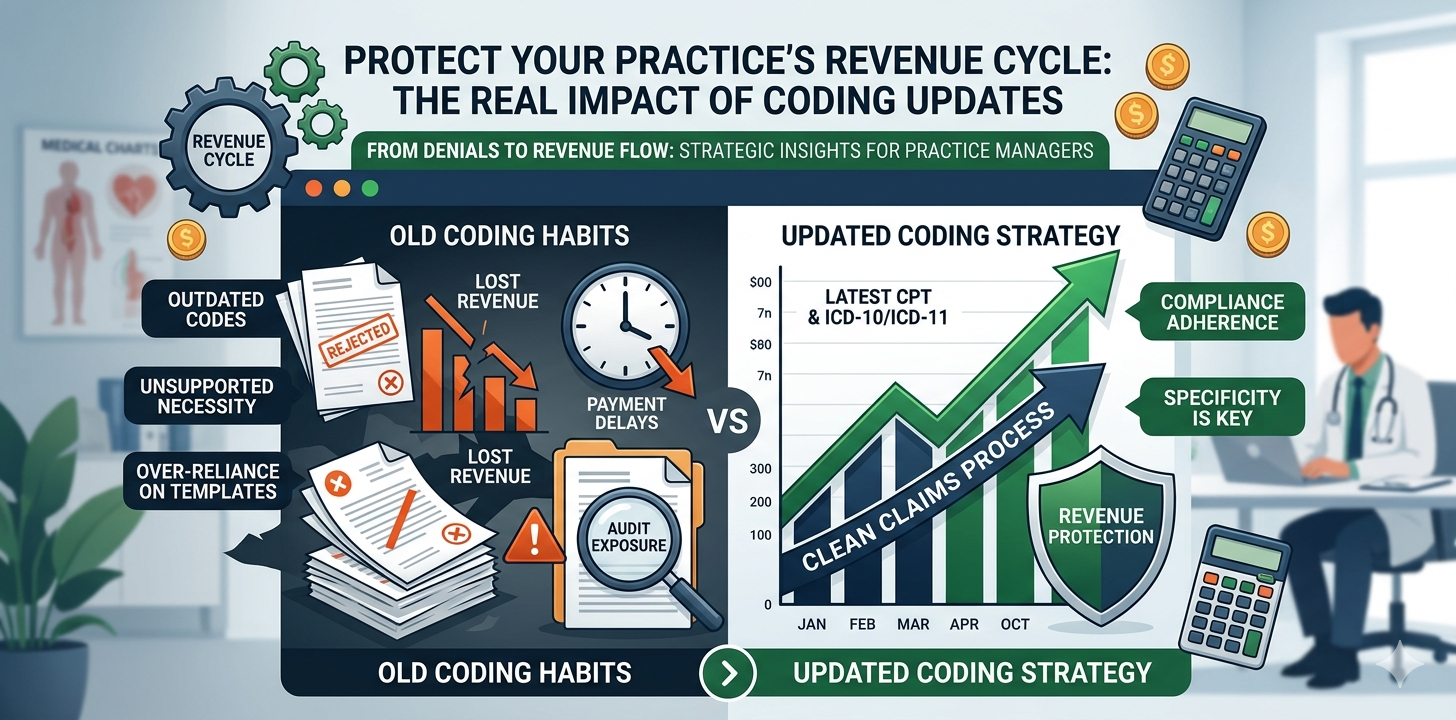
Coding mistakes do not just affect one claim. Over time, they create wider revenue cycle problems.
Poor coding habits can lead to:
- More denials
- Slower reimbursement
- Increased accounts receivable
- Staff burnout from rework
- Greater audit exposure
- Lost revenue that is never recovered
Clean coding supports smoother operations across the practice. It helps billing teams work faster, reduces frustration, and creates a better financial experience for both providers and patients.
For organizations trying to strengthen front-end and back-end performance, getting CPT and ICD coding right is one of the most practical places to start.
Final Thoughts
CPT and ICD codes are closely connected, but they do not do the same job. CPT codes explain the service. ICD codes explain the reason. When they are accurate, specific, and supported by documentation, claims
Recent Comments